QuantumRF in Boca Raton: Benefits, Features, Recovery, and How It Compares With Surgery
Loose or crepey skin can be frustrating after aging, pregnancy, weight changes, or significant weight loss. Some patients want more improvement than a surface treatment can provide but are not ready for a facelift, tummy tuck, arm lift, or other excisional surgery. QuantumRF by InMode was developed for that space between noninvasive treatments and traditional surgery.
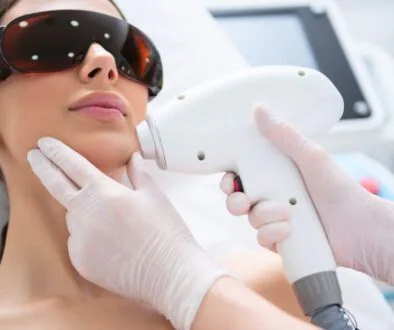
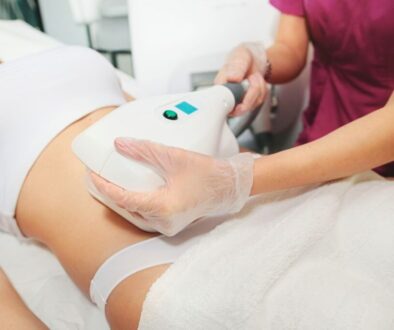
Four Seasons Laser Center is pleased to introduce QuantumRF skin tightening in Boca Raton, a minimally invasive radiofrequency technology designed for procedures in which soft-tissue contraction is needed. The treatment works below the skin with controlled bipolar radiofrequency energy. Its goal is to contract selected tissue and improve contour while using much smaller access points and generally less recovery than excisional surgery.
QuantumRF is not a magic wand, a weight-loss treatment, or a replacement for every surgical procedure. Its value is precision: the technology gives an appropriately trained medical provider another option for patients with mild to moderate laxity, localized contour concerns, or loose skin following weight loss. A personal consultation is necessary to decide whether QuantumRF, another energy-based treatment, surgery, or a staged combination is the most appropriate route.
What Is QuantumRF by InMode?
QuantumRF is a minimally invasive component of InMode’s IgniteRF platform. It uses pulsed bipolar radiofrequency energy delivered through a slender, single-use cannula beneath the skin. Unlike an external device that heats only from the surface, QuantumRF places its active electrodes within the treatment plane so energy can be delivered directly to selected subdermal tissue.
The U.S. Food and Drug Administration cleared the InMode RF System under 510(k) K240780 in July 2024. The clearance covers dermatological and general surgical procedures in which coagulation or contraction of soft tissue, or hemostasis, is needed. In January 2026, the Ignite RF System received an additional 510(k) clearance under K251254 with the same general indication. These are FDA clearances based on substantial equivalence; they should not be described as FDA approval of a particular cosmetic result.
According to InMode, QuantumRF can deliver fractionated radiofrequency energy internally at depths of up to 60 millimeters. The system is available with three lightweight cannulas: QuantumRF 10 for smaller, more delicate treatment areas and QuantumRF 17 and 25 for larger zones. This range helps the provider match the handpiece and treatment plan to the patient’s anatomy rather than use one approach everywhere.
How QuantumRF Works
Radiofrequency energy produces controlled heat within tissue. With QuantumRF, bipolar electrodes inside the cannula deliver short pulses of energy in a mapped treatment plane. The provider controls the amount and distribution of energy while moving through the planned area. The objective is controlled soft-tissue coagulation and contraction—not uncontrolled heating.
The FDA’s K240780 summary describes the InMode RF System as a computerized platform with temperature and impedance feedback. The system monitors treatment conditions and adjusts energy delivery. The Quantum handpieces use two internal bipolar electrodes, without an external return electrode, and allow the thermal effect to be controlled through the amount of energy delivered.
Because treatment is performed below the skin, technique matters. The provider must understand anatomy, tissue thickness, safe treatment planes, energy selection, and even coverage. This is a medical procedure that should be performed by a licensed, properly trained professional under appropriate medical oversight—not an at-home treatment or a routine facial.
Key QuantumRF Features
Pulsed Bipolar Radiofrequency
QuantumRF delivers precision pulses of bipolar RF energy within the selected subdermal layer. The short-pulse approach is designed to create targeted thermal effects while limiting unnecessary bulk heating of surrounding tissue.
Treatment at Multiple Depths
The manufacturer reports internal treatment capabilities reaching up to 60 millimeters. Depth is not automatically a measure of quality; the correct depth depends on the body area, tissue thickness, anatomy, and clinical goal. The important feature is the provider’s ability to plan a layer-specific treatment.
Three Cannula Sizes
QuantumRF 10 is intended for smaller or more delicate areas. QuantumRF 17 and QuantumRF 25 are designed for larger treatment zones. Having several options can support customized treatment of the face, neck, arms, abdomen, flanks, thighs, knees, or other selected areas when clinically appropriate.
Customizable Energy Delivery
Treatment is mapped according to anatomy and concern. The provider can adjust the energy plan and coverage instead of applying identical settings to every patient. This makes consultation, marking, and a realistic discussion of goals essential parts of the procedure.
Integration With Other InMode Treatments
QuantumRF can be used within a broader treatment strategy. Depending on the patient’s needs, a provider may discuss combining deeper soft-tissue contraction with a fractional treatment such as Morpheus8 for more superficial texture and dermal remodeling. Combination care is not automatically better; it should be selected only when the additional procedure addresses a separate concern and can be performed safely.
Potential Benefits of QuantumRF
The central benefit is meaningful tissue contraction with less invasiveness than traditional excisional surgery. For a properly selected patient, potential advantages may include a firmer-looking contour, improvement in localized laxity, small access points rather than long surgical incisions, and a shorter recovery period than a facelift, tummy tuck, or body lift.
QuantumRF may also be attractive to people who want natural-looking refinement rather than a dramatic change in identity. InMode markets the treatment as a single-session procedure with minimal downtime, and some patients may return to ordinary activities within days. Actual recovery varies with the treatment area, the extent of the procedure, individual healing, and whether other treatments are performed at the same visit.
Patients who have lost weight—including some people using GLP-1 medications—may notice looseness or deflation that exercise and skin care cannot correct. QuantumRF may be considered when the skin laxity is limited enough for a minimally invasive approach. It is not a treatment for obesity, does not replace healthy weight management, and cannot remove a large apron of excess skin.
How Is QuantumRF Performing in the Market?
QuantumRF is still a relatively new technology, so the most responsible assessment separates broader market momentum from product-specific proof. InMode introduced the IgniteRF and Luxora platforms with QuantumRF in 2024. In its 2025 annual filing, the company reported that minimally invasive products represented 78 percent of its revenue mix. InMode also reported more than 340,000 RF-assisted lipolysis procedures across its BodyTite, EmbraceRF, and IgniteRF platforms and associated handpieces. Those figures demonstrate substantial adoption of InMode’s broader minimally invasive RF category, but they are not QuantumRF-only sales or outcome statistics.
Demand for post-weight-loss aesthetic care is also creating a favorable market. McKinsey’s 2026 survey of 127 U.S. aesthetic providers found that 70 percent planned to increase offerings for patients using GLP-1 medications and 64 percent planned to provide curated treatment pathways. The same research emphasized that patients with more extensive laxity may still need surgery, while those with moderate changes may respond to nonsurgical or energy-based options.
Clinical evidence specific to QuantumRF is developing. An 80-patient prospective study registered as NCT06958978 is evaluating skin elasticity and subdermal retraction when the Quantum probe is used during high-definition liposculpture. The study is enrolling and does not yet provide completed results. That matters: early provider enthusiasm and an FDA clearance support legitimate market entry, but they should not be confused with mature, head-to-head evidence proving superiority over every alternative.
QuantumRF Compared With Traditional Surgery
The most significant difference is the treatment method. Traditional lifting or body-contouring surgery removes, repositions, or sutures tissue through larger incisions. QuantumRF uses small access points to deliver energy beneath the skin and stimulate controlled contraction. It generally does not remove sheets of excess skin.
For the right patient, the smaller access points may mean less visible scarring, less tissue trauma, and a shorter recovery than excisional surgery. Depending on the treatment plan, QuantumRF may be performed with local or tumescent anesthesia; some cases or combination procedures may require a different setting or anesthesia plan. Surgery more often requires an operating room, larger incisions, deeper anesthesia, and weeks of staged recovery.
The tradeoff is the degree of correction. A facelift, neck lift, tummy tuck, arm lift, or body lift can physically remove and reposition substantial loose tissue. QuantumRF cannot create the same result when laxity is severe. Its outcomes are generally more gradual and more dependent on tissue quality, age, anatomy, healing, weight stability, and the amount of laxity present before treatment.
The best consultation is not built around selling one device. It should answer a more useful question: which option offers the most appropriate balance of improvement, invasiveness, recovery, cost, scar burden, and risk for this particular patient? In some cases QuantumRF may delay or reduce the need for surgery. In others, a surgical referral is the more honest recommendation.
What Areas Can QuantumRF Treat?
QuantumRF may be considered for selected facial and body zones in which soft-tissue contraction or contour refinement is desired. Commonly discussed areas include the lower face, jawline, under the chin, neck, upper arms, abdomen, waist or flanks, thighs, knees, and other localized regions. The QuantumRF 10 handpiece supports smaller or more delicate anatomy, while the 17 and 25 handpieces support larger areas.
Not every area, concern, or body type is appropriate. Loose skin can result from different combinations of collagen loss, fat loss, muscle separation, weight fluctuation, sun damage, and genetics. A careful examination helps distinguish a concern that may respond to tissue contraction from one that requires fat reduction, muscle repair, skin excision, resurfacing, or another treatment.
What to Expect Before, During, and After Treatment
The process begins with a medical and aesthetic evaluation. The provider should review the treatment goal, health history, medications and supplements, prior procedures, implanted devices, scarring history, skin condition, recent weight changes, and the likelihood that weight will remain stable. Standardized photographs and treatment markings may be used to establish a baseline and plan even coverage.
During the procedure, the area is prepared and anesthetized according to the treatment plan. The QuantumRF handpiece is introduced through a small access point, and energy is delivered along mapped passes within the selected tissue plane. Procedure time depends on the number and size of the areas treated and whether QuantumRF is combined with another modality.
Temporary swelling, tenderness, bruising, firmness, numbness, or drainage from access points may occur. Compression garments may be recommended for some body areas. Patients receive individualized instructions about cleaning the sites, activity, sleeping position, compression, sun exposure, and when to contact the practice. Risks can include burns, infection, prolonged numbness, contour irregularity, pigment change, scarring, fluid collection, and injury to nearby structures. A qualified provider should explain the relevant risks before consent.
Some contraction may be noticeable early because heat affects existing collagen and tissue architecture. Additional improvement may develop over the following weeks and months as swelling resolves and tissue remodeling progresses. Results vary, and no ethical provider should guarantee a specific percentage of tightening or a surgical-equivalent result.
Who May Be a Good Candidate?
The strongest candidates are generally healthy adults with realistic expectations, mild to moderate localized laxity, and relatively stable weight. They understand that QuantumRF is minimally invasive and involves recovery, even if that recovery is usually shorter than surgery. They are also willing to follow post-treatment instructions and attend follow-up visits.
Patients with extensive hanging skin, major muscle separation, unstable weight, certain medical conditions, active infection, poor wound-healing risk, or expectations that require tissue removal may need another approach. Pregnancy, implanted electronic devices, medications that affect bleeding or healing, and prior surgery in the treatment area are among the factors that must be discussed. Candidacy can only be determined through a professional consultation.
Why Choose Four Seasons Laser Center for QuantumRF in Boca Raton?
Advanced technology is most valuable when it is paired with individualized planning and honest expectations. Four Seasons Laser Center brings more than 15 years of aesthetic-laser experience to Boca Raton and evaluates each patient according to anatomy, treatment history, skin characteristics, lifestyle, and desired recovery.
The center’s growing technology portfolio also supports thoughtful combination planning. Patients can learn whether QuantumRF should be considered alone, paired with an appropriate skin-rejuvenation treatment, or replaced by a different option. Explore our skin rejuvenation treatments and our guide to collagen-boosting procedures for more information about complementary approaches.
To find out whether QuantumRF skin tightening in Boca Raton fits your goals, schedule a consultation with Four Seasons Laser Center or call 1-800-608-2344. A consultation can clarify candidacy, recommended treatment areas, anesthesia, recovery, expected results, alternatives, and personalized pricing.
Frequently Asked Questions About QuantumRF
Is QuantumRF a surgical procedure?
QuantumRF is minimally invasive. A slender handpiece is introduced beneath the skin through a small access point, so it is more involved than an external facial or noninvasive skin-tightening treatment. It generally uses smaller access points and less recovery than excisional surgery, but it is still a medical procedure.
Can QuantumRF replace a facelift or tummy tuck?
Not for every patient. QuantumRF may improve mild to moderate localized laxity, but it does not remove large amounts of excess skin or repair separated abdominal muscles. Significant laxity may be better treated with a facelift, tummy tuck, arm lift, body lift, or another surgical option.
How many QuantumRF treatments are needed?
InMode positions QuantumRF as a single-session treatment for many appropriate candidates. The actual recommendation depends on the area, tissue quality, goals, prior procedures, and whether combination care is planned. A consultation is needed before estimating the number of treatments.
How much downtime should I expect?
Some patients may resume ordinary activities within several days, but swelling, bruising, tenderness, firmness, numbness, or compression requirements can last longer. Recovery varies by area and treatment intensity. Your provider will give activity and aftercare instructions based on your procedure.
When will I see QuantumRF results?
Early tightening may be visible as swelling begins to settle, while additional contour changes can develop over the following weeks and months. Tissue remodeling takes time. Results vary according to anatomy, age, skin quality, treatment plan, healing, and weight stability.
Is QuantumRF appropriate after GLP-1 weight loss?
It may be considered for some patients with localized mild to moderate laxity after their weight and medical status are stable. People with extensive excess skin may need surgical removal. Timing and candidacy should be determined through a medical consultation that considers the full weight-loss journey.
Individual results and recovery vary. This article is educational and is not a substitute for medical advice, diagnosis, or a personal treatment recommendation.
Researched and written by: Edilane Piedra
References
- InMode — QuantumRF Technology Overview
- U.S. FDA — InMode RF System 510(k) K240780
- U.S. FDA — Ignite RF System 510(k) K251254
- InMode Ltd. — 2025 Annual Report
- McKinsey & Company — Curating Aesthetic Care for GLP-1 Patients
- ClinicalTrials.gov — NCT06958978 Quantum Probe Study
Connect With Four Seasons Laser Center
For appointments and questions, call 1-800-608-2344. Follow Four Seasons Laser Center for treatment education, patient information, announcements, and the latest news: