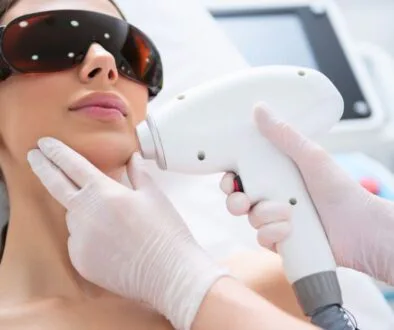
PicoFY™ Arrives at Four Seasons Laser Center: A New Era of Picosecond Precision in Boca Raton
Four Seasons Laser Center is expanding its aesthetic offerings in Boca Raton, Florida, with PicoFY™, InMode’s next-generation picosecond laser platform. Designed for tattoo removal, benign pigmented lesions, acne scars, wrinkles, and skin rejuvenation, PicoFY brings several highly requested applications together in one customizable system.
The U.S. Food and Drug Administration database lists PICO SHINING—identified there as PICO-K and PICOFY—under 510(k) K261214, with a substantially equivalent decision dated May 11, 2026. PicoFY is FDA-cleared as a powered laser surgical instrument; it is not “FDA-approved.”
PicoFY expands the center’s ability to build individualized plans around a patient’s concern, skin characteristics, treatment history, and goals. No two tattoos, pigment patterns, scars, or signs of aging respond exactly alike.
What Makes Picosecond Technology Different?
A picosecond is one trillionth of a second. Picosecond lasers deliver energy in extremely short pulses, creating a strong photoacoustic—or pressure-wave—effect within a selected target. When the target is tattoo ink or excess pigment, that rapid energy can break larger particles into smaller fragments. The body’s natural processes then gradually clear those fragments over time.
The short pulse duration concentrates energy rapidly and can limit unnecessary heat diffusion into surrounding tissue compared with longer-pulse approaches. Treatment is not risk-free, painless, or appropriate for everyone, but it gives a trained provider a precise tool for selected pigment and ink.
According to InMode, PicoFY includes three standard handpieces that allow practitioners to switch between spot sizes and deliver precise, uniform, customizable treatments. This helps the provider match the treatment area and target instead of relying on a one-setting-fits-all method.
Advanced Tattoo Removal and Fading
Tattoos are meant to last because their ink particles are too large for the body to remove easily. PicoFY delivers rapid pulses intended to fragment targeted ink so the body can gradually process smaller particles between appointments. Treatments may be used for substantial removal, selective fading, or lightening an existing tattoo before a cover-up.
Patients should expect tattoo removal to be a process, not a one-visit eraser. The number of sessions depends on the ink’s color, composition, depth, density, age, location, layering, and professional or amateur application. Skin type, immune response, previous laser treatments, smoking, circulation, and the amount of time allowed between sessions can also influence fading. Some tattoos respond faster than others, and complete clearance cannot be promised. For a detailed overview of pricing factors, treatment timing, comfort, safety, and aftercare, read our guide to laser tattoo removal in Boca Raton.
In a randomized trial involving black tattoos, a 1064-nm picosecond laser produced similar clearance to a nanosecond laser after two treatments, although participants reported significantly less pain on the picosecond-treated side. The study examined picosecond technology generally, not PicoFY specifically, and outcomes still depend on the tattoo and treatment plan.
Treatment for Benign Pigmented Lesions
Florida sunshine is part of the Boca Raton lifestyle, but years of ultraviolet exposure can contribute to visible sun spots and uneven tone. PicoFY is designed to treat benign pigmented lesions, a category that can include appropriately diagnosed freckles, age spots, and solar lentigines. By targeting excess pigment, treatment may help selected spots fade and create a clearer, more even-looking complexion.
“Benign” is a critical word. Any spot that is new, changing, irregular, bleeding, symptomatic, or otherwise suspicious should be evaluated by a qualified medical professional before cosmetic laser treatment. A laser appointment is not a substitute for skin-cancer screening, and an uncertain lesion should not simply be treated as a sun spot.
Pigment treatment requires attention to skin tone and the nature of the discoloration. A 2026 critical review found meaningful utility for selected pigmentary disorders while emphasizing uneven evidence and the risk of lightening or darkening the skin, particularly in darker phototypes. Melasma is especially complex and can recur. PicoFY may be considered within an individualized plan, but every brown patch should not be treated as the same condition.
Skin Rejuvenation, Wrinkles, and Acne Scars
PicoFY also moves beyond pigment and tattoo applications. InMode identifies wrinkles and acne scars among the platform’s treatment uses. Fractional picosecond treatments can create microscopic zones of controlled optical and mechanical stimulation in the skin. That response may encourage gradual dermal remodeling, including the processes associated with collagen and elastin renewal.
For patients, the goal is not to change facial identity. It is to improve the appearance of texture, soften selected fine lines and wrinkles, and make certain acne scars look less noticeable over a planned series of treatments. Improvements develop progressively because collagen remodeling takes time. The best results are usually assessed over weeks or months rather than immediately after a session.
Acne scars are not all alike. Rolling, boxcar, ice-pick, raised, and discolored scars may require different techniques or combinations of treatments. Likewise, a fine line caused by photoaging is different from deeper expression-related movement. During consultation, the provider can determine whether PicoFY is appropriate alone or whether another modality would better address part of the concern.
This versatility is one of PicoFY’s most practical benefits. One platform can support targeted pigment correction, tattoo fading, and fractional skin renewal, while its multiple handpieces allow the treatment approach to be adapted. Patients receive a plan based on the condition being treated rather than simply the name of the device.
What Patients May Experience
A PicoFY visit begins with an assessment of the treatment area, medical history, medications, recent sun exposure, previous procedures, scarring history, and tendency toward post-inflammatory pigment changes. Photographs may be taken to establish a baseline. Depending on the indication and individual risk profile, the provider may recommend a test spot before treating a larger area.
During treatment, patients may feel snapping, warmth, or stinging. Temporary redness, swelling, tenderness, pinpoint bleeding, crusting, whitening of tattooed skin, or darkening of treated pigment can occur. Less common risks include blistering, infection, scarring, incomplete clearance, and hypo- or hyperpigmentation.
Downtime varies. Some patients resume ordinary activities quickly, while others need time for visible redness, swelling, or crusting to settle. Following aftercare instructions is essential. Patients may be advised to keep the area clean, avoid picking, use recommended topical products, and protect treated skin from sunlight. Consistent broad-spectrum sunscreen is especially important in South Florida, where incidental ultraviolet exposure can interfere with recovery and promote new discoloration.
Why Treatment Planning Matters
Technology delivers its greatest value when paired with sound clinical judgment. Energy level, handpiece, spot size, treatment pattern, session spacing, and aftercare influence the outcome. More aggressive treatment is not automatically better; settings may need adjustment for skin type, pigment concerns, or changing tattoo layers.
Patients should share relevant health information and follow pre-treatment guidance. Recent tanning, active infection, open skin, certain medications, pregnancy, a history of abnormal scarring, or an undiagnosed lesion may change the recommendation or require postponement. A personal consultation is the proper place to discuss candidacy, alternatives, expected number of visits, cost, recovery, and realistic endpoints.
PicoFY at Four Seasons Laser Center in Boca Raton
Four Seasons Laser Center states that it has more than 15 years of experience and uses advanced laser technologies with individualized treatment planning. The center is located at 4720 NW Boca Raton Boulevard, Suite D-104, in Boca Raton. Adding PicoFY strengthens its range of nonsurgical aesthetic services and gives patients access to newly cleared picosecond technology close to home.
For someone researching tattoo removal, sun-damage correction, age spots, freckles, acne scars, wrinkles, or overall skin rejuvenation, PicoFY offers an appealing combination of speed, precision, and versatility. Its three standard handpieces help providers customize treatment, while picosecond energy addresses targets through rapid photoacoustic action and can support fractional dermal remodeling.
The most important benefit, however, is not simply that PicoFY is new. It is that the platform can be used within a thoughtful, condition-specific plan. A consultation at Four Seasons Laser Center can clarify whether PicoFY matches the patient’s skin, concern, schedule, and expectations. Individual results and recovery vary, multiple sessions may be needed, and maintenance or combination care may be recommended.
For Boca Raton patients who want to fade unwanted ink, improve selected benign pigmentation, or refresh the appearance of textured and photoaged skin, PicoFY is a notable addition to the local aesthetic landscape—and a technology worth discussing with a qualified provider.
Researched and written by: Edilane Piedra
Five Reference Sites
- InMode — Introducing PicoFY
- U.S. Food and Drug Administration — 510(k) K261214
- Four Seasons Laser Center — About Us
- Journal of Cosmetic and Regenerative Medicine — Clinical Application of Picosecond Laser: An Update and Critical Review
- British Journal of Dermatology — Picosecond vs. Nanosecond Laser in Tattoo Removal