Laser Tattoo Removal in Boca Raton: Cost, Sessions, Pain, and What to Expect
A tattoo can represent a moment, a person, or an earlier version of your life. When that meaning changes—or the artwork simply no longer feels right—professional laser tattoo removal in Boca Raton can help you fade or substantially remove unwanted ink through a carefully planned series of treatments.
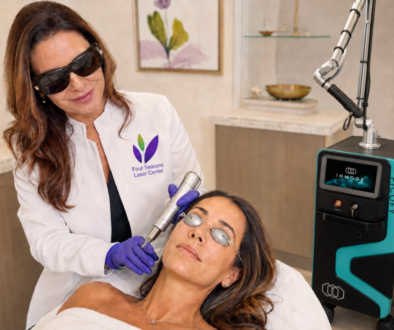
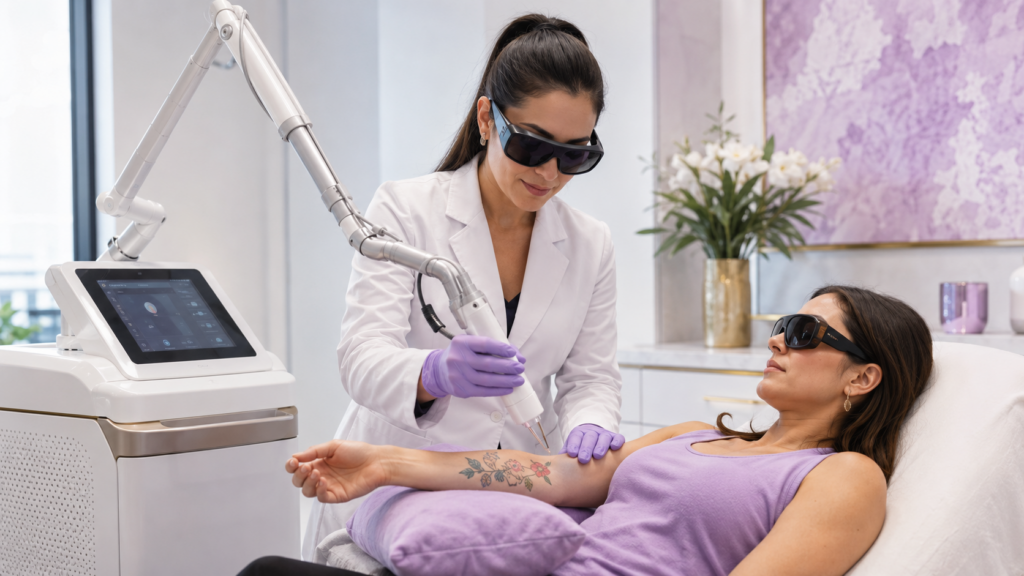
Four Seasons Laser Center uses PicoFY, InMode’s picosecond laser platform, to create individualized tattoo-removal plans. Rather than scraping or cutting the skin, laser treatment delivers extremely short pulses of energy that target tattoo pigment. The fragmented ink particles are then gradually processed by the body between appointments.
The short answer: Laser tattoo removal is a process, not a one-visit eraser. The number of sessions, price, comfort level, and final result depend on the tattoo’s colors, size, depth, location, age, density, layering, and your skin’s response. A consultation is the best way to receive a realistic plan.
How Does Laser Tattoo Removal Work?
Tattoo ink remains visible because pigment is deposited in the dermis, beneath the skin’s outer layer. The particles are generally too large for the body to clear on its own.
During laser tattoo removal, selected wavelengths of light are absorbed by the tattoo pigment. The energy breaks larger ink particles into smaller fragments without intentionally removing the surrounding skin. Your immune system gradually carries away some of those fragments, which is why fading develops over time and why the skin needs recovery time between treatments.
Laser treatment has largely replaced older methods such as dermabrasion and surgical excision for many tattoos. The U.S. Food and Drug Administration identifies laser treatment as the most common professional tattoo-removal method, while warning that no tattoo-removal creams or do-it-yourself kits have been FDA-approved.
What Is Picosecond Tattoo Removal?
A picosecond is one trillionth of a second. Picosecond laser tattoo removal delivers energy in exceptionally short pulses, producing a strong photoacoustic—or pressure-wave—effect within targeted ink. This rapid action helps fragment pigment so the body can gradually clear it.
Four Seasons Laser Center’s PicoFY system includes multiple handpieces and selectable spot sizes, allowing the treatment approach to be adjusted to the tattoo and treatment area. The FDA database lists PICO SHINING—also identified as PICO-K and PICOFY—under 510(k) K261214 as an FDA-cleared powered laser surgical instrument.
FDA-cleared does not mean that every tattoo will disappear completely or that treatment is risk-free. Laser choice, settings, patient selection, aftercare, and the experience of the treating professional all matter.
Can Every Tattoo Color Be Removed?
No responsible provider should promise complete removal of every tattoo. Different pigments absorb different wavelengths, and even inks that look similar can contain different ingredients.
Black and dark-blue inks usually respond more readily because they absorb a broad range of laser wavelengths. Green, yellow, red, turquoise, and other colors can be more resistant or require a different treatment strategy. White, flesh-toned, and some cosmetic pigments can darken when exposed to laser energy, making permanent makeup and certain light inks especially complex.
Professional tattoos may take longer to fade because the ink is often dense, deep, and layered. Amateur tattoos can sometimes respond faster because their pigment may be less uniform. A tattoo that has already been covered or retouched may contain several hidden layers that become visible as the upper ink fades.
Your consultation should assess:
- Ink colors, density, and visible layering
- Tattoo size, age, and location on the body
- Professional, amateur, cosmetic, or traumatic origin
- Skin tone and history of pigment changes
- Existing texture or scarring from the original tattoo
- Prior laser treatments and how the skin responded
- Health history, medications, and healing considerations
How Many Tattoo Removal Sessions Will I Need?
Most tattoos require multiple laser sessions. There is no universal number because the body must clear fragmented pigment gradually, and treating every layer aggressively in one appointment could increase the risk of injury.
The treatment timeline can be affected by the tattoo’s size, depth, colors, location, age, saturation, and whether it was professionally applied. Circulation, immune response, smoking, skin characteristics, previous treatment, and the interval between appointments may also influence progress.
Some patients want the tattoo removed as completely as possible. Others only need tattoo fading for a cover-up, which may require fewer appointments because the goal is to give the tattoo artist a lighter canvas. Tell your provider what outcome you want so the plan can be built around the right endpoint.
Fading continues between sessions. Scheduling treatments too close together does not necessarily produce faster clearance; the skin needs time to recover, and the body needs time to process disrupted ink. Your provider will recommend spacing based on the treatment area and your response.
How Much Does Laser Tattoo Removal Cost in Boca Raton?
The cost of tattoo removal is personalized because a small, lightly applied black tattoo is very different from a large, dense, multicolored piece. Pricing may depend on:
- The tattoo’s dimensions and total treatment area
- Ink colors and density
- The complexity and number of visible layers
- Whether the goal is cover-up fading or more extensive removal
- The estimated number of appointments
- Any special clinical considerations
When comparing providers, look beyond the lowest advertised per-session price. Ask what laser technology will be used, who will perform the treatment, whether your skin type and ink colors have been evaluated, what aftercare support is included, and how progress will be documented. A consultation at Four Seasons Laser Center allows the team to examine your tattoo and explain the recommended treatment plan before you decide.
Does Laser Tattoo Removal Hurt?
Comfort varies by person and by tattoo location. Patients often compare each laser pulse to a quick rubber-band snap against the skin. Areas with less soft tissue or more nerve endings may feel more sensitive, and larger tattoos require more pulses.
Your provider can discuss appropriate comfort measures based on the area being treated and your medical history. Treatment time for a small tattoo may be brief, although preparation, photography, cleansing, eye protection, and aftercare are also part of the visit.
Will Tattoo Removal Leave a Scar?
Scarring is possible, but it is not the expected outcome of properly selected laser treatment. The original tattooing process may already have created texture or scar tissue that becomes easier to see as the pigment fades.
Temporary redness, swelling, tenderness, pinpoint bleeding, whitening, crusting, or blistering may occur after treatment. Less common risks include infection, lasting lightening or darkening of the skin, texture changes, and scarring. Risk can be influenced by skin type, treatment settings, sun exposure, picking at the area, aftercare, and individual healing.
People with a history of keloids or abnormal scars should disclose it during consultation. The same applies to active skin conditions, recent tanning, open wounds, current medications, pregnancy or breastfeeding, and prior reactions to laser procedures.
Is Laser Tattoo Removal Safe for Darker Skin Tones?
People with darker skin tones may be candidates for tattoo removal, but the treatment requires careful assessment. Melanin in the skin can compete with tattoo ink for laser energy, increasing the possibility of temporary or lasting pigment change when settings or wavelengths are not appropriate.
A qualified provider may use conservative settings, select a wavelength carefully, recommend a test spot, or allow more recovery time. The safest plan is individualized; skin tone should never be treated as an afterthought.
How Should I Prepare for a Tattoo Removal Appointment?
Follow the instructions given by your treating professional. In general, patients may be asked to avoid tanning and excessive sun exposure, disclose medications and supplements, and arrive with the area clean and free of irritating products. Do not attempt to burn, peel, scrub, or chemically fade the tattoo before your appointment.
Bring a list of medications and explain any history of cold sores, infection, poor healing, pigment changes, or raised scars. If the tattoo includes permanent makeup, white ink, or flesh-toned pigment, tell the provider before treatment because these colors may react unpredictably.
Tattoo Removal Aftercare
Your provider’s instructions should take priority because aftercare can vary. Common recommendations may include keeping the area clean, applying only approved topical products, using a protective dressing when directed, and avoiding scratching, picking, or breaking blisters.
Protect treated skin from sun exposure. Clothing that fully covers the area may be preferable while it heals, followed by broad-spectrum sunscreen when appropriate. Contact the clinic if you develop worsening pain, spreading redness, drainage, fever, or another unexpected reaction.
Do not judge the final amount of fading immediately after treatment. Early whitening, swelling, or redness is temporary, while ink clearance happens gradually over the following weeks.
Why Choose Four Seasons Laser Center for Tattoo Removal?
Four Seasons Laser Center combines more than 15 years of medical-aesthetics experience with individualized treatment planning and modern laser technology. The addition of PicoFY gives the Boca Raton team a picosecond platform designed for unwanted tattoos and other selected pigment concerns.
Located at 4720 NW Boca Raton Boulevard, Suite D-104, the center serves patients from Boca Raton, Delray Beach, Deerfield Beach, Boynton Beach, Parkland, Coral Springs, Fort Lauderdale, and surrounding South Florida communities.
Your tattoo is unique, and your treatment plan should be too. During a consultation, the team can evaluate your tattoo, discuss the likelihood of fading, review risks, explain expected downtime, and outline a treatment range without making unrealistic guarantees.
Ready to take the next step? Schedule a consultation with Four Seasons Laser Center to receive a personalized tattoo-removal assessment.
Frequently Asked Questions About Laser Tattoo Removal
Can a tattoo be removed completely?
Some tattoos fade substantially, while others leave residual pigment or a faint “ghost” image. Ink color, composition, depth, layering, skin response, and treatment history all affect the endpoint. Complete clearance cannot be guaranteed.
Can colored tattoos be removed?
Many colored inks can be treated, but they may respond differently from black ink and may require different wavelengths or more sessions. Green, yellow, red, turquoise, white, and flesh-toned pigments can be especially challenging.
How long should I wait between tattoo removal sessions?
Treatment sessions are generally separated by several weeks so the skin can heal and the body can process fragmented ink. Your provider should determine the interval based on the tattoo, treatment area, settings, and your recovery.
Does tattoo removal work for a cover-up?
Yes. Partial laser fading can reduce the density of an existing tattoo and give a tattoo artist more flexibility for a cover-up. Tell the laser provider and tattoo artist that fading—not full removal—is your objective.
Are tattoo removal creams effective?
The FDA has not approved tattoo-removal creams, ointments, or do-it-yourself kits and is not aware of evidence that they safely remove pigment in the dermis. Some products can cause burns, rashes, or scars.
How soon will I see results?
The tattoo may look temporarily white, red, or swollen immediately after treatment, but meaningful fading develops gradually as the body clears fragmented ink. Progress is best assessed through consistent photographs taken over a series of visits.
Individual results, treatment requirements, and recovery vary. This article is educational and is not a substitute for an in-person medical assessment.
References and further reading
- U.S. Food and Drug Administration — Tattoo Removal: Options and Results
- American Academy of Dermatology — Tattoo Removal: Lasers Outshine Other Methods
- American Society for Dermatologic Surgery — Laser Therapy for Unwanted Tattoo
- InMode — Introducing PicoFY
- U.S. FDA 510(k) Database — K261214, PICO SHINING (PICO-K; PICOFY)
Connect With Four Seasons Laser Center
Have questions about laser tattoo removal or want to arrange a personalized consultation? Please call 1-800-608-2344, schedule a consultation online, or reach us through our official social media channels:
- Instagram — Four Seasons Laser Centers
- TikTok — Four Seasons Laser Center
- LinkedIn — Four Seasons Laser Center
- Facebook — Four Seasons Laser
- X — @4SeasonsLaserFL
- YouTube — Four Seasons Laser Center
Follow us for treatment information, clinic updates, patient education, and the latest news from Four Seasons Laser Center.